Showing posts with label Wilson's Phalarope. Show all posts

Saturday, August 12, 2017

Fantastic, Phenomenal Phalarope Flocks


Most people in southwestern Ontario probably know about the long-staying Phalaropes at the East Essex S.L. The funny thing about this sighting was that day by day, it seemed more Phalaropes incrementally appeared. I had gone on one occasion and I had not seen any. Then on my second try, I was able to see 5 Red-necked Phalaropes and 2 Wilson's! I also had a Kory and Jeremy H sighting!


At Ojibway, I have not been too active recently due to the fact that I've taken four university night courses this summer. The occasional walk has revealed some decent sightings though. I had seen a small family of four Eastern Bluebirds (both parents and two juveniles).  Back in early August, Dense Blazingstar was at peak bloom. I made it out occasionally just to appreciate how cool they are. I also noted my first square stemmed Monkeflower (Mimulus ringens).


I've come across a few good birding related articles over rhe last few days and thought i would share. Great reading!


Rise of the Millenial Birder
http://www.macleans.ca/society/the-rise-of-millennial-urban-dwelling-birders/

Birdwatchers Behaving Like Paparazzi
http://www.macleans.ca/society/life/the-flocking-instinct/

Great website devoted to TICK AWARENESS
http://www.tickencounter.org/prevention/top_ten_things_list

How to avoid bone-headed birding mistakes
http://www.audubon.org/news/birdist-rule-4-avoid-making-these-boneheaded-birding-mistakes

The Birdist's top 100 rules for Birding
http://www.audubon.org/section/birdists-rules-birding?page=6


Good Birding!
Dwayne

Wednesday, August 28, 2013

Birding Pointe Mouillee on Lake Erie's West Shore

The famous "Cell 3" at Pointe Mouillee. A great place to view shorebirds!

For the last three or so years, I've tried to do some shorebirding in late August at Pointe Mouillee (pronounced "puent moi-yee" - French for wet point) in Rockwood Michigan. I've had some awesome shorebirds here in the past... Marbled Godwits, Red Knots, Buff breasted Sandpipers and Phalaropes. Its about 30 minutes south of Detroit but right across the river from Amherstburg [Google Map, Gov Site, Gov Map].

This huge 4000 acre wetland has a man-made dyke that the US Army Engineers are using to store contaminated sediment from the Rouge River. I've learnt from experience that if you go, you need to bring a bike, water, granola, hats... Be prepared for a rigorous journey, because you are biking like 4 Miles (6.5KMs). I find that even with hat, water and snacks, I somehow get heat stroke when I go, but maybe I'm just out of shape!
Snowy Egrets at Pointe Mouillee

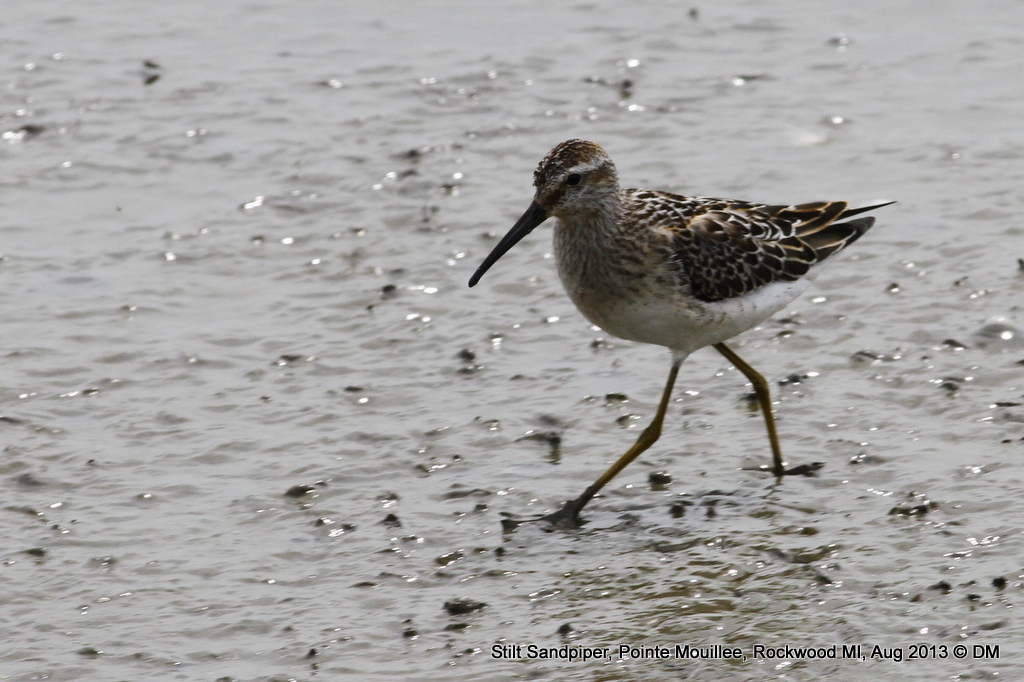
A recent trip gave looks at some pretty good birds. Some highlights were 5 Snowy Egrets, 1 American Avocet, 3 Wilsons Phalarope, 4 Red necked Phalaropes, 1 Black bellied Plover, 1 White rumped Sandpiper, 10 Stilt Sandpipers, 2-3 Probably LBDs (no LLBs) ... I think I saw over 50 species on this trip!
Wilsons & Red Necked Phalaropes at Pointe Mouillee

Stilt Sandpiper at Pointe Mouillee

Avocet, Wilsons Phalarope & White rumped Sandpiper at Pointe Mouillee

Grebes and Coots at Pointe Mouillee
A birder that I met out there asked me if I use E-bird, and I replied... "I want to"... Its just so daunting. I must have seen over 50 species though!


I will try to bird Pelee on Labour Day weekend, and then frequent the Holiday Beach Migration Observatory heavily during the fall. I also have 5-6 bird postings on the back burner. I'm just really busy right now with work and night school. Stay tuned!

Good birding!
Dwaynejava

Budding Birder

PS: I missed the Wheatley Brown Pelican, as I waited till Saturday morning to go see it (work). My son & I, along with Jeremy Bensette tried for it but found out it had gone back to Cleveland!

Curve-tailed Bush Katydid (Point Pelee)

Friday, May 17, 2013

Kirtland's Warbler at Pelee


At noon on Wednesday May 15, 2013 I had checked my email at work to find an amazing Ontbird Posting. Barb Charlton & David 'The Machine' Bell found a Kirtlands Warber in the far northwest corner of the park, not too distant from the front entrance gate. I figured there was no way I was going to find it after working into the afternoon and driving to Leamington. But, to my amazement, it was still in the area it had been reported when I arrived at the park, easily seen foraging high in the single row of trees lining Sanctuary Pond. A large group of birders (and park staff directing traffic) made finding the bird simple. It was very high in the trees during my time viewing the bird, and I just got a few decent ID shots of this rare beauty. Hundreds of people got a chance to see this rare bird so Barb and Dave... Thank You!


Migration path and the chances of seeing this bird outside of Michigan:
Even though this bird migrates from the Bahamas Archipelago through Georgia and the Carolinas up through Ohio and finally ending in the northern lower peninsula Michigan, it is very rarely seen in migration. Magee Marsh and Point Pelee though have the advantage of being a popular migrant stop, being geographically small, and having huge numbers of talented birders scouring the place. To find this one bird in Point Pelee National Park though still takes more than luck, you have to be a brilliant birder.

A Brief History of the Kirtland's Warbler:

Discovery in 1851 - A specimen was shot and collected on Dr. Jared Kirtland’s farm near Cleveland, Ohio(US FWS). The birds name obviously honours its finder . Oddly enough, 1851 was the year John James Audubon died. It must have been amazing to discover a new bird that was never described!

Wintering Grounds Found in 1879 - The winter range of the Kirtland's warbler was discovered in 1879 when a specimen was collected on Andros Island in the Bahama Islands archipelago.(Michigan DNR)

Breeding Grounds found in 1903 - It was not until 1903 that Norman A. Wood discovered the first nest in Oscoda County in northern lower Michigan (Michigan DNR).

Jack Pine Habitat Requirements:
-Requires pine habitat with trees between 6-20 years old.
-Prescribed burns (or logging) has provided more optimal breeding habitat for the birds.
-Kirtlands Warblers prefer a nesting site with Blueberry bushes as that is a favored fruit of this bird... cool!
-Michigan and US Wildlife employees have done an amazing job helping this bird's population recover.
-A successful breeding nest was discovered at Petawawa Ontario in 2007 (Drake).

Cowbird Parasitism:
Besides it habitat requirements, Cowbirds had been hurting the breeding success rates, so a successful cowbird management program has been put in place to reduce the numbers and increase the nest success for the Kirtlands Warbler. Nature lover and blogger Kristen Martin features some photos of the cowbird traps here.

Improved Outlook for the Future:
This chart below shows a trend in the number of singing male Kirtlands Warblers in Michigan. Since 1990, a continual increase in the number of singing males is evident. Props to Michigan and the US-FWS for putting resources towards saving this wonderful species. I'm just a humble birder from Ontario, but perhaps Michigan should consider changing its state bird from the American Robin to the Kirtlands Warbler? :-)

Image Source: Michigan DNR

Other birds seen on May 15th were this Cape May Warbler (Setophaga tigrina)... I have not seen a northbound breeding-plumaged Cape May since May 1st, 2010 !!! Oddly, I have seen many southbound Cape May Warblers every year since.
The Tiger-Warbler! (Setophaga tigrina)


How many Tern species do you see? Can you see the SB Dowitchers?
Blenheim SL - Finally figured out where the gate is after 4 entrance attempts!

I had missed a Worm-eating Warbler by a five minutes again after seeing the Kirtlands Warbler, but, I can't complain. My friend Rick from Leamington reminds me when I miss a rarity is that I need to "save something for retirement". So, Worm-eating Warbler... we have a date for late April 2030!!!

Good Birding!
Dwaynejava

Sources:

USFWS, "Kirtland's Warbler (Dendroica kirtlandii)",January 3, 2013 , WEB, May 16, 2013, http://www.fws.gov/midwest/endangered/birds/Kirtland/kiwafctsht.html

Michigan DNR, "Kirtland's Warbler (Dendroica kirtlandii)", ND, WEB, May 16, 2013
http://www.michigan.gov/dnr/0,1607,7-153-10370_12145_12202-32591--,00.html

Drake Laura, "Endangered warbler found nesting in Petawawa, Canada.com, NOVEMBER 2, 2007, WEB, May 16, 2013, "http://www.canada.com/story.html?id=a111ac43-2210-4785-a2b5-cd118a102e1f

Lifer Summary: Kirtlands Warbler  -332

Friday, August 5, 2011

Wilson's Phalarope whilst kayaking...


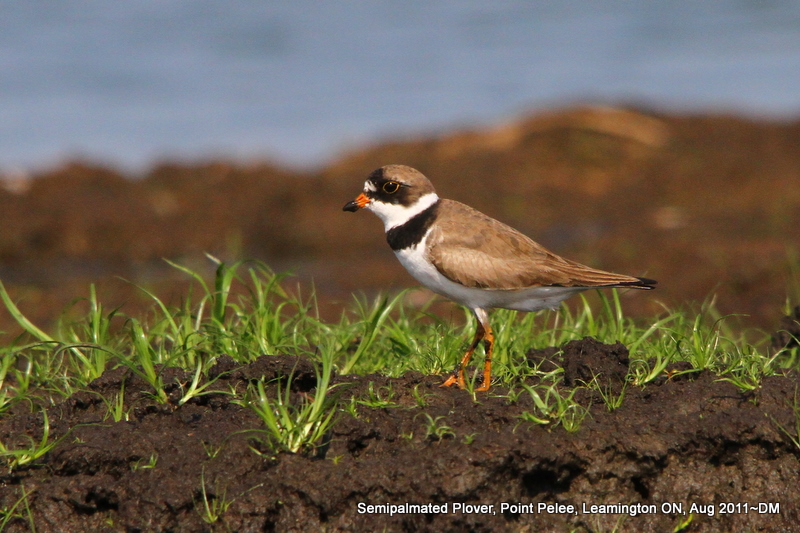
A recent kayak trip to PPNP had most of the easily seen peeps... Not much different than last week, Semipalmated Plovers and Sandpipers, Least and Spotted Sandpipers were easily seen. Several hundred Black Terns were out in the main marsh area. The highlight of the trip was a first summer Wilson's Phalarope, which completely ignored me and my bright red 16.5' kayak as it foraged the small muddy islands in PPNP's marsh (see video). This WP was so close at one point, it was closer than the minimal focus distance on my lens! Very cool!


Good Birding!
Dwaynejava

Saturday, August 21, 2010

Birding Pointe Mouillee in Rockwood Michigan


After about 1.5 years of birding, I have seen/photographed about 185 birds. I'm not bragging (or putting myself down)... the number of birds a birder sees depends on many variables, such as the geographic location the birder lives in, time spent out in nature, seasons, habitats, optics and keen-ness. I've had this psychological level I want to pass, which is 200 bird species mainly in the Essex County region. To get to this level though, I have to start counting some shorebirds.

One of the last areas of birding that is still a bit confusing to me is shorebirds! Up until recently, I did not have a field-guide, and I still don't have a scope or binoculars, and they come and go from the Windsor area in the span of about two months of the year. There are no really good birding spots/habitat for shorebirding (in Windsor) that I am aware of. (One surprisingly decent spot I've recently discovered is behind This School in Lasalle).

Mid to Late August is the time of year when Ont-birders get emails notifying them of all the shorebirds at various habitats that attract these shorebirds (flooded fields, Lagoons & Wetlands). Some of the birds listed include:

- Black Bellied Plover -
- Stilt Sandpiper
- Baird's Sandpiper (Lifer)
- Semi-Palmated Sandpiper (Lifer)
- Semi-Palmated Plover
- Lesser Yellowlegs
- Greater Yellowlegs
- Pectoral Sandpiper (lifer)
- Least Sandpiper
- Killdeer

 So, recently I came across a blog that suggested there were 20+ shorebird species, including American Avocet, Hudsonian and Spotted Godwits, Phalaropes and others! And it was only 35 minutes from Windsor!
This park is called Pointe Mouillee in Rockwood, Michigan (http://www.dnr.state.mi.us/publications/pdfs/wildlife/viewingguide/slp/107Mouillee/index.htm). I had to go and check it out. This park is located on the western shores of lake erie, about 30 minutes south of Detroit.


Birds seen generally include the birds listed above plus:

Wilsons Phalarope (Lifer-giving himself away with his circular foraging strategy!)
Willet
Pied Billed Grebe (abundant)
Black Crowned Night Herons
Yellow Headed Blackbird (Lifer-in flight, with white wing-patches flashing)
Belted Kingfisher
GB Heron
Great Egret
Red Knot (lifer)
Sora Rail (Flushed from dyke... only seen for a second)
Bobolink (lifer - but in non breeding plumage)

Thanks must go out to Dane from Ohio who I met out on the pathways and who shared his scoped views, knowledge and company with me. As usual, I am so impressed with the keen observation skills of the birders I meet.

Do you see the Wilson's Phalarope in this photo?


So, for the mostpart, I have about 8 new lifers today (pushing me to about 193 birds on my life list) , but really, I'm not overly excited because well... they're shorebirds and to make matters worse, they're in their vague, non-breeding plumage. I think shorebirding will grow on me if I get a scope and see them in April with their breeding plumage. To see a Godwit or an Avocet today probably would have blown my mind. The Bobolink was nice though!

Good Birding
Dwayne

LinkWithin

Related Posts Plugin for WordPress, Blogger...