 |
| Wilson's Plover at Little Estero Lagoon |
My first posting focused on Bunche Beach, but this second one covers some sightings from a few other Fort Myers birding hotspots such as Harnes Marsh, Babcock Webb WMA, Corkscrew Preserve, Little Estero Lagoon, and even a few observations from Lakes Park.
Little Estero Lagoon
I really wanted to see Wilsons and Snowy Plovers at Little Estero Lagoon, a small reminant of natural beach at the south end of Fort Myers Beach, but I had only found Wilson's (life bird). Piping Plovers and a host of other shorebirds were present as well. I even tried to find Snowy Plovers on Sanibel Island but dipped again. A Magnificent Frigatebird was a nice consolation prize though.
 |
| Magnificent Frigatebird |
Harnes Marsh
I had two Kite Species at Harnes Marsh (Swallow tailed and Snail Kite), as well as some good butterfly viewing as well. This marsh is well known to host Apple Snails and attracts birds such as Limpkin and Snail Kites (they have a penchant for escargot). The Snail Kite was a life bird. Butterflies seen included: Queen, Great southern White, Little Yellow, Gulf Fritillary, Checked Skipper, Firey Skipper.
 |
| Snail Kite |
 |
| Queen Butterfly |
 |
| Swallow tailed Kite |
Lakes Park is a city park that features train rides, splash pad, botanical gardens and playgrounds for the kids. I had seen a Least Bittern last year, but this year, my highlights included Ceraunus Blue Butterfly, Loggerhead Shrike and nice looks at Gulf Fritillary butterfly. I must admit, seeing a fluttering blue-gold micro butterfly while eating a picnic and discovering this new Ceraunus Blue butterfly was just as gratifying as finding a new bird species. It is a beauty! I was thinking as I photographed this butterfly... How many tourists to Florida would make an effort to find the various butterflies it has to offer? How many people have the inclination, the interest, the optics to see this tiny little gem? ...You would have to be pretty nerdy! :-)
 |
| Ceraunus Blue |
 |
| Loggerhead Shrike - Always a pleasure to see! |
 |
| Gulf Fritillary |
Babcock Webb WMA [link] is a 65,000 acre nature preserve about 30 minutes north of Fort Myers. I wanted to see a few birds there: Bachmans Sparrow, Red Cockaded Woodpecker and Brown headed Nuthatch. I dipped on the Bachmans Sparrow, but did find a Brown Headed Nuthatch in the RCW colony! It was nice to spend time at Babcock Webb and just listen for a gentle tapping of the pine bark to find the RCWs. Brown headed Nuthatch is so small, you need to be patient and just listen for their nasal toy horn call. So gratifying to witness these endemic Southeastern species of the pine forest. I had tried to find Brown Headed Nuthatches on my previous two visits to Florida, and this is the first time I was able to find it! Brown headed Nuthatches are a species in decline from what I have read.
 |
| Brown Headed Nuthatch - Using a small piece of pine bark in its bill as a tool |
 |
| Red Cockaded Woodpecker |
 |
| Brown headed Nuthatch nest cavity in a snag! |

 |
| White Peacock Butterfly |
So there you have it! Some of my personal nature viewing highlights from my trip to Fort Myers. Six life birds include:
Western Sandpiper 339
Prairie Warbler 340
Long billed Curlew 341
Brown headed Nuthatch 342
Snail Kite 343
Wilson's Plover 344
Butterfly Lifers:
Great Southern White
Mangrove Buckeye
Ceraunus Blue
Queen Butterfly
Painful Misses:
Bachmans Sparrow
Magrove Cuckoo
Snowy Plover
Little Metalmark Butterfly
Mangrove Skipper
Good Birding!
Dwaynejava
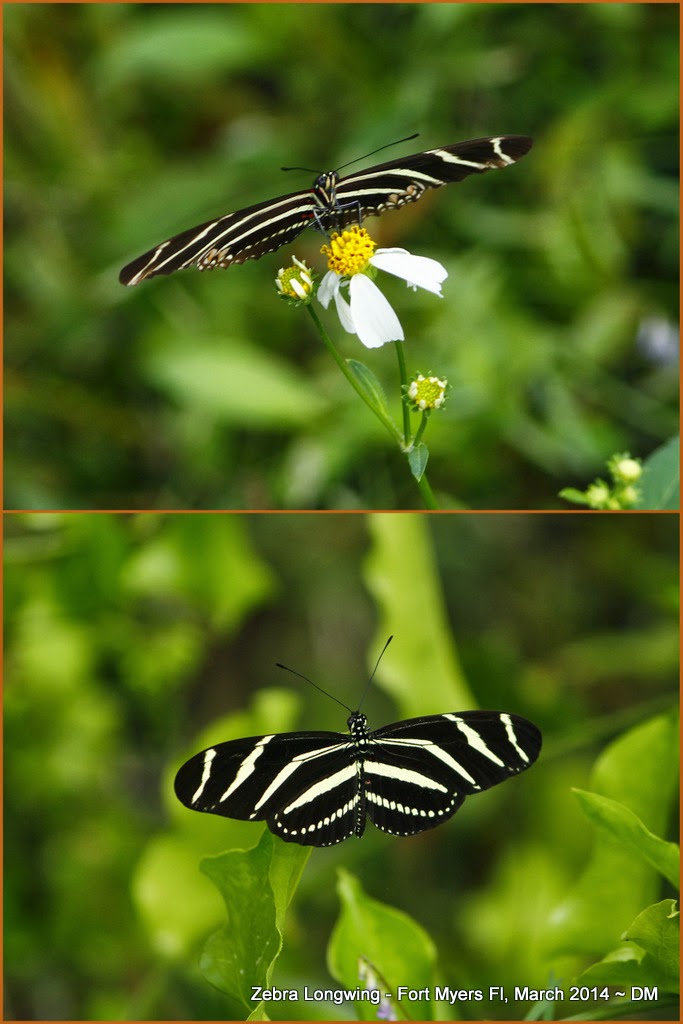 |
| Zebra Longwing - Corkscrew Preserve |


