Showing posts with label Queen Butterfly. Show all posts

Saturday, March 16, 2024

Birding Miami Florida in March 2024


I spent the last week in the Miami/Fort Lauderdale area. The trip was with my wife and two boys and was for generic leisure and birding was not the main priority. Even still I made great efforts to visit a few natural areas over the week and get some birdwatching and butterfly watching in. In almost an underwhelming fashion, I was able to pick up one life bird and one life butterfly.


Target birds that were possible but not likely-
Mangrove cuckoo(migrates in late march)
Western spindalis
La Sagra's flycatcher
Thick billed vireo
Black wiskered vireo
Local parakeets
Least tern (migrates in late march)
Short tailed hawk

Miami Blue butterfly - extinct to extirpated to a few small islands near key west. Read more here: Miami Blue Butterfly | FWC (myfwc.com)


My efforts to birdwatch was to look at some hotspots in ebird and focus on some of the top locations.


Bill Baggs Park -Key Biscayne (link)
Prairie Warbler
Chuck wills Widow
Common warblers
Little blue Heron
Sanderling
Magnificent frigatebird
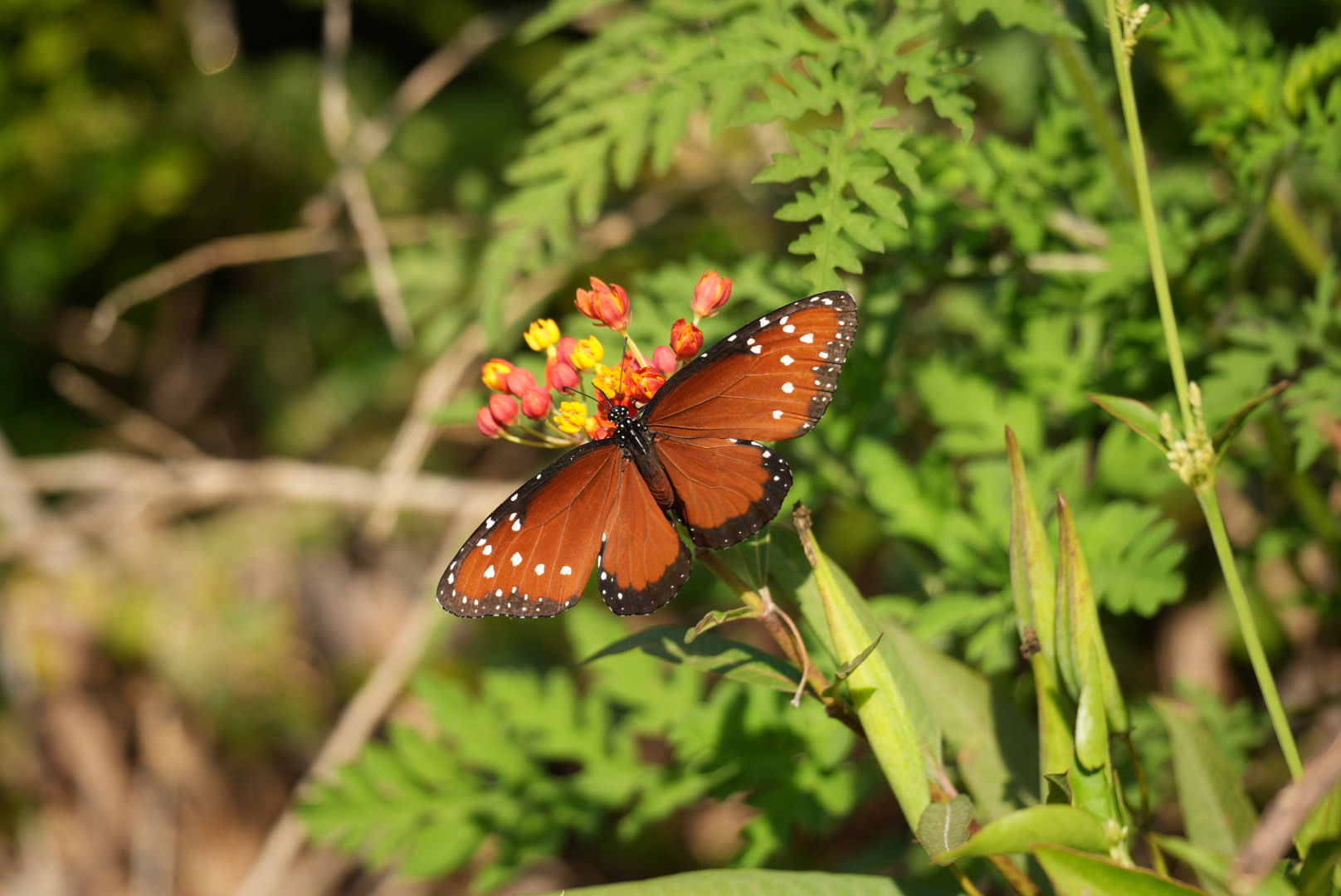
Queen butterfly
Julia butterfly



Chuck Wills Widow ! (seen flycatching in leaf litter in mid-morning, then perched)


Anne Kolbe reserve - Hollywood Fl (link)
Yellow throated warbler
Yellow rumped warbler
Palm warbler
Black and white warbler
American redstart
Northern Parula
*Mangrove tree crab


MATHESON HAMMOCK PARK (link)
Yellow throated Vireo
Red shouldered hawk
Red headed woodpecker
Yellow rumped warbler
Palm warbler
Red shouldered hawk
Magrove skipper (worn - but life butterfly)
Zebra longwing butterfly


Mangrove Skipper (worn) - Life Butterfly (#164)


Random neighborhood baseball diamond
-Loggerhead shrike
-Prairie Warbler


Hal Scott Preserve (link) (closer to Orlando ---  Red cockaded woodpeckers are here but i did not see them on this brief visit.  )
Eastern bluebird
Brown headed nutchatch
Blue grey gnatchcher
Bachmans Sparrow (lifer! #471)
Pine warbler


Bachman's Sparrow - Lifer. Most certainly soon to be renamed


I guess this trip has reminded me that even if ebird shows that a bird may be present in a location.... 90% of the days you might only see the (at best) 90 percentile birds. An area that seems promising can be a let-down and seemingly devoid of birdlife, but another area that seems to not be of great significance could have surprisingly good birds. Sometimes we have to remember that the best part of travelling is the journey, not the destination itself. 

Good Birding,
Dwayne

Last Few Life Birds:
Black crested Titmouse (TX) 466
Snowy Plover (TX) 467 
Neotropical Cormorant (TX) 468
White tailed Kite (TX) 469
Least Grebe (TX) 470

Bachmans Sparrow (FL) 471


Last few Life Butterflies:
162 - Southern Dogface (Zerene cesonia) - Caves San Antonio TX , yes [link] 
163 - Henry's Elfin (Callophrys henrici) - Caves San Antonio TX , yes [link] 

164- Mangrove Skipper (Phocides pigmalion) - Mattheson Park Area MIAMI FLORIDA, yes [link]

Sunday, March 17, 2019

Fort Myers Birding and Butterfly Watching (Part 1 of 2) V2


Part 1 - Butterflies 

I am fortunate enough to have been able to make a last minute trip to Fort Myers Florida - Which is in the Southwestern corner of the State of Florida. I have not been to Florida for at least 4 years so I figured it would be nice to go again.

Butterfly watching in Florida is always fun because many of the butterflies that you will see there (if you are from Ontario or the Great Lakes Region) will be life species. My butterfly watching efforts were much better than my birding efforts so I will start with them.

Butterfly watching is just as exciting as birding - but it can be painfully frustrating to photograph. Much patience is needed!

One of my top butterfly goals during this trip was to see a Little Metalmark species. This species has a little history with me because I had read that they used to live in Southeast Michigan (Swamp Metalmark), as well as Ohio - but they have since been extirpated. I had even made a trip to Cedar Bog in Ohio a few years ago, hoping to see Swamp Metalmarks and the local naturalist told me that they hadn't been seen since 2009. The Little Metalmark is not endangered in Florida as there is lots of habitat to support its foodplant - Yellow Thistle. I was butterfly watching at Babcock Webb WMA for one morning that I had budgeted to going - and I was running out of time. The clock was ticking towards 11am and I needed to meet the family at noon. I stopped my van along the road to followup on a nice Palamedes Swallowtail and found myself in a roadside slough. The Swallowtail posed nicely for photos and to my utter amazement, a tiny, fluttering orange butterfly - smaller than an Azure butterfly fluttered by me. I waited patiently for it to land on a plant, and sure enough ... I had found my target species. Amazingly - while I was photographing it ... An interesting plant caught my eye... It was a Ladies Tresses Orchid! I did some research online while waiting at the airport and my best guess at identification is a Spring Ladies Tresses Orchid.


Little Metalmark - Babcock Webb WMA 


Another really neat story in my butterfly watching efforts was that I was at a municpal park in Fort Myers. In between splashpads that the kids enjoyed, and train rides that the park offers... I had noted some butterflies flying along the flowering weeds in the lawn. Again - lots of new species to behold. At one point, I had seen a small yellow butterfly - and it was fluttering above the grass and seemingly never stopping to land. I had assumed it was a "little yellow" or maybe a "dainty sulphur" so I was suprized to realize that the photo I had taken of this butterfly was neither! Another lifer... but what was it? Again, some research online indicated that it might be a Barred Yellow.


Other butterflies seen at Lakes Park include: Phaon Crescent (Phyciodes phaon), Mallow Scrub Hairstreak, Gulf Fritillary, Common Checkered Skipper (or Tropical Checkered Skipper), and Monarch.


Going back to Babcock Webb WMA - I had lifered some other species as well. They were: Palamedes Swallowtail - Papilio palamedes, Red-banded Hairstreak (Calycopis cecrops ),


Butterfly Lifers from this trip 

120 - Barred Yellow
121 - Pheaon Cresent
122 - Mallow Scrub Hairstreak
123 - Red banded Skipper
124- Little Metalmark
125 - Twin Spot Skipper
126- Palamedes Swallowtail

*** New for Version 2 of this posting - some photos that I was late in identifying:
127 - Monk Skipper
128 - Whirlabout Skipper
129 - Palmetto Skipper
130 - Southern Broken Dash
131 - Eastern Pygmy Blue (trying to salvage from deleted photos)


Yellow Milkwort - Babcock Webb WMA


So, in closing - butterfly watching is a wonderful way to spend time out in nature. It offers lots of learning, identification, photography, exercise and just sheer appreciation of beauty, habitat, biodiversity, botany, mental health .... the list could go on.

Babcock Webb WMA Inaturalist Species Page:
https://www.inaturalist.org/observations?place_id=118950&view=species

My butterfly Life List page (which needs to be updated)
http://dwaynejava.blogspot.com/p/blog-page_8.html


Good butterfly watching!
Dwayne

LinkWithin

Related Posts Plugin for WordPress, Blogger...